Core System
T10⁶®
Two-stage non-irradiated terminal sterilization for human allograft tissue.
SAL 10⁻⁶
Terminal sterility assurance achieved without irradiation
Two-Stage
Cold sterilization followed by SteriFlex™ VHP terminal sterilization
Bone · Tendon · Soft
Validated for all three allograft tissue categories
2010
First non-irradiated tissue products approved in the United States and Canada
Architecture
Two Stages. One Designation.
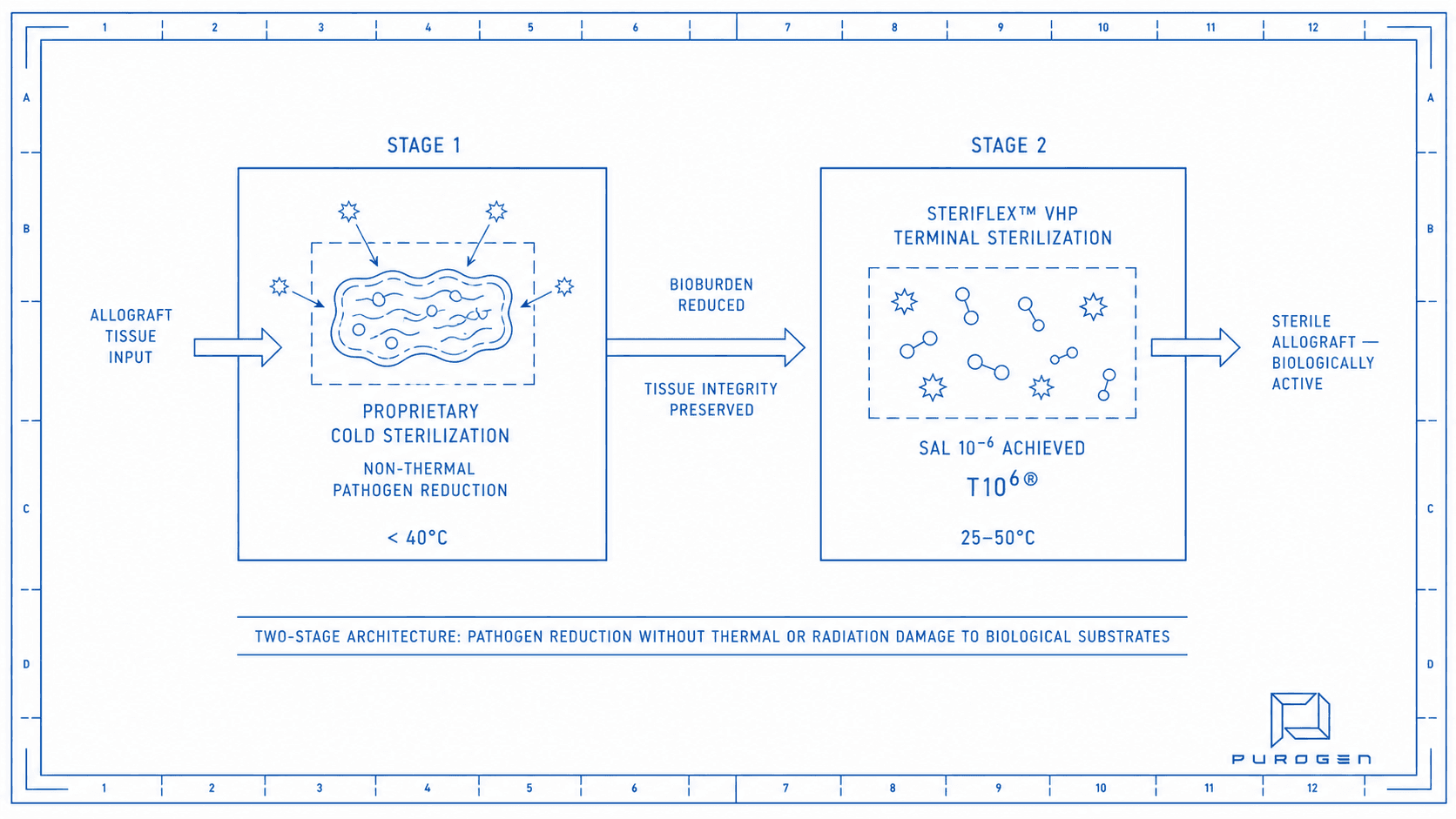
T10⁶® is a process designation — a non-irradiated terminal treatment for human allograft tissue. The designation covers bone, tendon, and soft tissue categories across two coordinated sterilization stages.
The first stage is a proprietary cold sterilization process. It reduces bioburden ahead of terminal exposure while preserving the structural and biological properties that determine transplant success — osteoinductivity, mechanical integrity, and endogenous biological factors.
The second stage is terminal sterilization delivered through the SteriFlex™ VHP platform — parametric, low-temperature, residue-free, and validated to SAL 10⁻⁶. Vaporized hydrogen peroxide decomposes entirely to water and oxygen. No aeration required.
Stage 1 — Cold Sterilization
Proprietary cold-process step. Reduces bioburden ahead of terminal exposure. Preserves osteoinductivity, growth factors, and mechanical properties.
Stage 2 — SteriFlex™ VHP
Parametric vaporized hydrogen peroxide (VH₂O₂) terminal sterilization. SAL 10⁻⁶. Decomposes to water and oxygen. No aeration required.
Biological Integrity
Sterility Without Compromise
T10⁶®'s two-stage architecture is specifically designed to maintain the biological properties that make allograft tissue effective. The cold sterilization stage preserves what irradiation destroys; the SteriFlex VHP terminal stage achieves the sterility assurance that conventional alternatives compromise.
What T10⁶® Preserves
Validated Categories
Allograft Tissue Applications
Validated for terminal sterilization across the three primary allograft tissue categories — each with distinct structural and biological preservation requirements met by the T10⁶® two-stage architecture.
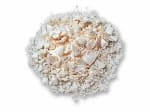
Bone
Cortical, cancellous, and demineralized bone matrix
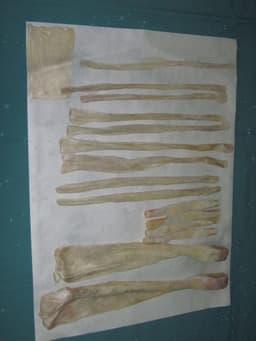
Tendon
Structural allografts preserving mechanical properties
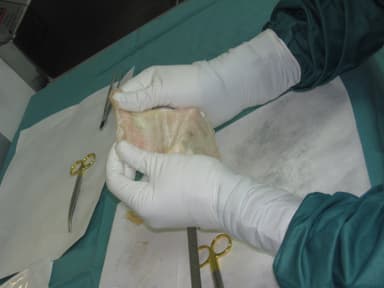
Soft Tissue
Dermal, fascia, and amniotic membrane products
SAL 10⁻⁶
Terminal sterilization achieved without irradiation
US & Canada
First non-irradiated tissue products approved in both markets
30 Years
Continuous R&D in allograft tissue processing
Validation Logic
Why Allograft Sterilization Cannot Rely on Inspection Alone
Terminal Risk Is Not Visible
Microbial contamination in dense tissue matrices cannot be detected by inspection. Sterility cannot be verified on individual grafts — it must be demonstrated through process validation capable of achieving SAL 10⁻⁶ consistently and reproducibly.
Packaging and Sterile Barrier
Sterile barrier integrity cannot be fully verified by 100% inspection. Heat-sealed packaging must be validated across the full operating range — worst-case conditions, material variability, and production-scale throughput — to establish that every sealed unit maintains the sterile field.
Process Variables Unique to Tissue
Cycle design for allograft tissue must account for bioburden level, load density and geometry, moisture content, packaging configuration, and biological substrate sensitivity. Each variable interacts with VHP penetration, contact time, and residue decomposition.
T10⁶® was qualified under IQ/OQ/PQ discipline — installation qualification, operational qualification, and performance qualification — with challenge testing at worst-case operating conditions. Calibrated monitoring, change control, and ongoing revalidation requirements are embedded in the designation.
A validated process is not a claim. It is documented evidence that the system consistently produces results that meet predetermined specifications under production conditions.
Platform
Built on SteriFlex™
The terminal stage of T10⁶® is delivered by SteriFlex™ — PuroGen's patented parametric VHP platform. Dwell time, reagent dosing, vacuum profile, and humidity are independently tuned to the bioburden and load characteristics of allograft tissue.
Tissue processors gain access to the full SteriFlex™ parametric capability through a process designation specifically validated for biological substrates — without designing or qualifying a new sterilization cycle from the ground up.
Heritage
From Supercritical CO₂ to Scalable VHP
PuroGen invented T10⁶® in 2006 using supercritical CO₂ as the terminal stage — the first non-irradiated terminal sterilization process for allograft tissue. Supercritical CO₂ operates under the enormous pressures required to maintain its supercritical state, constraining chamber volume to approximately 20 liters — sufficient for process validation, insufficient for production-scale tissue throughput. In 2010, PuroGen retired the supercritical CO₂ stage and replaced it with the SteriFlex™ VHP platform, delivering equivalent or superior sterility assurance at production-relevant capacity. Same designation. Same biological preservation. Operationally scalable.
Validated. Approved. Available.
T10⁶® is available through PuroGen's commercial pathways — from private-label tissue processing systems to deep strategic collaboration with PuroGen's engineering team. The process designation, validation heritage, and SteriFlex™ platform are each independently licensable.