Origin
Solving the Hardest Sterilization Problem in Medicine
Transplant tissue must be sterile and biologically functional. PuroGen has spent its entire history proving these goals are not mutually exclusive.
The Challenge
Sterility vs. Biological Function
Gamma irradiation achieves sterility — but at the cost of the very properties that make transplant tissue work. Mechanical strength, osteoinductivity, growth factors — all degraded by the radiation dose required for sterility assurance.
The tissue processing industry has long accepted this trade-off as unavoidable. Irradiate to sterilize, accept the biological damage, and compensate with higher doses of tissue or augmented surgical techniques.
Surgeons increasingly reject this compromise. The clinical trend toward non-irradiated tissue reflects a growing understanding that preserved biological activity translates directly to better patient outcomes — faster fusion, stronger integration, reduced complications.
PuroGen recognized this from the beginning. The result is T10⁶® — a process designation built on a proprietary cold sterilization stage and the SteriFlex™ VHP platform, purpose-built to achieve terminal sterilization without biological compromise.
Heritage
Three Decades of Innovation
From foundational biomedical research to the first commercially approved non-irradiated tissue products — a timeline of invention that predates the industry's recognition of the need.
Biomedical R&D in Allograft Tissue Processing
Foundational research into sterilization methods that preserve the biological properties essential for successful transplantation outcomes.
First Cannula-Based Delivery System
Developed the first cannula-based delivery system for minimally invasive spinal fusion — translating tissue processing expertise into surgical innovation.
Allograft Implant Technologies Commercialized
Multiple allograft implant technologies brought to market including bone void fillers and spinal fusion devices. Real-world clinical validation begins.
T10⁶® — Supercritical CO₂ Sterilization
First non-irradiated supercritical CO₂ sterilization process for allograft tissue. PuroGen pioneers a method the industry wouldn't recognize for nearly two decades.
SteriFlex™ Formalized
First non-irradiated tissue products approved in both the United States and Canada. VHP-based sterilization moves from laboratory validation to regulated commercial use.
Validation Heritage
Validated Across the Full Allograft Environment
T10⁶® was not developed as a sterilization abstraction. It emerged from direct, sustained engagement with every validated system in allograft manufacturing — from controlled environment design to shelf-life qualification.
Allograft Tissue Formats
Lyophilized, demineralized, frozen structural, osteoarticular, demineralized bone matrix, bone-tendon-bone, and soft-tissue allografts — each with distinct processing, packaging, and preservation requirements.
Controlled Processing Environments
ISO-classified cleanroom operations, aseptic technique, gowning, sterile room setup, contamination prevention, and temperature-controlled cryogenic storage.
Validated Manufacturing Operations
Lyophilization, sterile barrier heat sealing, terminal sterilization, moisture residual testing, product labeling, shipping configuration, and environmental monitoring — each qualified under formal validation protocols.
Quality System Discipline
IQ/OQ/PQ protocols, challenge testing, validation matrices, calibration programs, preventive maintenance, change control, and training — the full infrastructure of a regulated manufacturing validation program.
T10⁶® Technology
Where T10⁶® Began
In 2006, PuroGen invented the first non-irradiated terminal sterilization process for allograft tissue — originally based on supercritical CO₂, then evolved to the SteriFlex™ VHP platform for production scale. The result was T10⁶®: a process designation that is itself a product of this validation heritage.
2006
PuroGen invents the first non-irradiated terminal sterilization process for allograft tissue
Clinical Impact
Validated Through Clinical Use
PuroGen-processed tissue has been used in real-world surgical applications across multiple tissue categories — providing clinical evidence that non-irradiated sterilization produces superior biological outcomes.
Bone
Cortical, cancellous, and demineralized bone matrix
Tendon
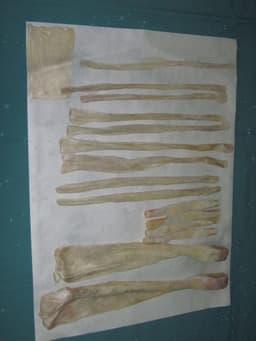
Structural allografts preserving mechanical properties
Soft Tissue
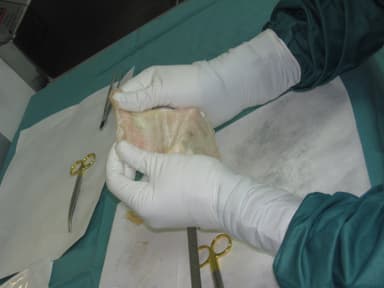
Dermal, fascia, and amniotic membrane products
SAL 10⁻⁶
Terminal sterilization achieved without irradiation
US & Canada
First non-irradiated tissue products approved in both markets
30 Years
Continuous R&D in tissue processing and sterilization
Provenance
Authored, Not Adopted
PuroGen has been an early innovator in non-irradiated terminal sterilization for allograft tissue since 1996 — developing the process, the validation framework, and the regulatory evidence as the company's own work, in direct collaboration with transplant surgeons and the agencies that govern human tissue products.
Three decades later, non-irradiated sterile allograft tissue remains a hard commodity to source. The work behind it has not gotten easier, and it cannot be shortened. Institutional knowledge of what tissue requires, what surgeons accept, and what regulators recognize accumulates over years inside the work — not by entering it. T10⁶® and SteriFlex™ are the visible expression of that knowledge; the knowledge itself is the asset.
Three decades of method. Still rare.
Partner with the Pioneers of Non-Irradiated Tissue Sterilization
Whether you're developing a new tissue product, transitioning from irradiation, or exploring strategic collaboration — PuroGen brings unmatched depth and a proven platform.